Pans · 6 min read
Stainless, non-stick or cast iron
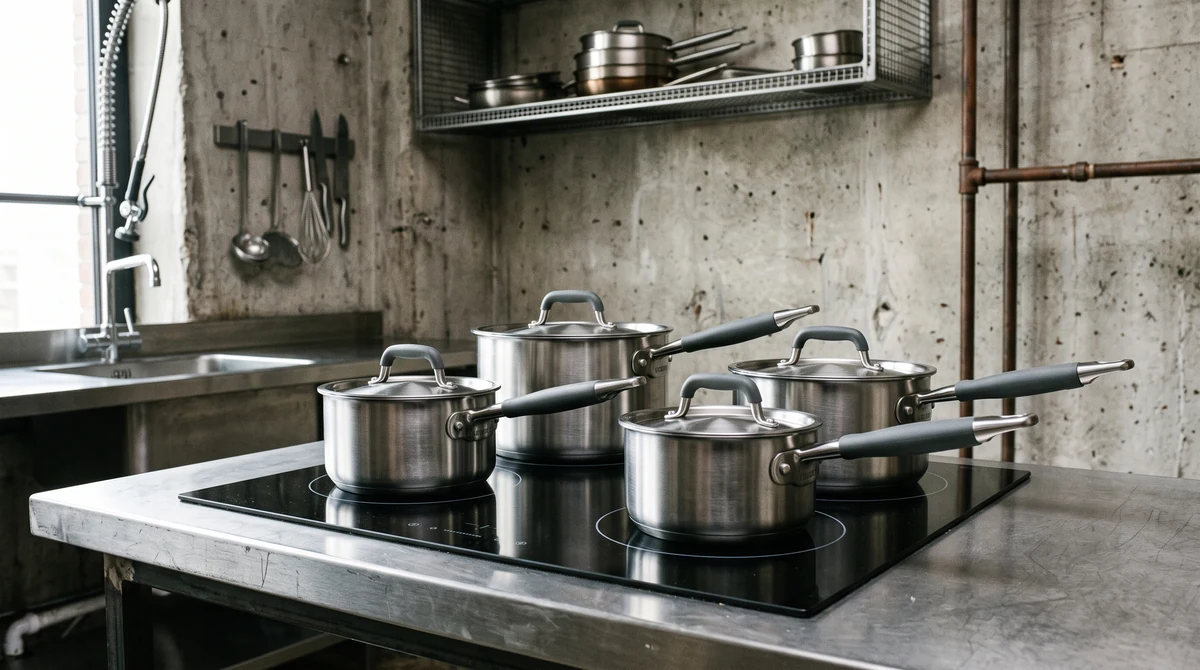
Three materials, three different jobs. Most kitchens need two of them, and almost nobody needs a fourteen-piece set.
Stainless steel
The workhorse. It browns properly, takes any heat, tolerates metal utensils, goes in the oven and lasts decades.
The thing that matters is not the steel — it is the base. Steel conducts heat poorly on its own, so good pans sandwich an aluminium or copper disc between steel layers. A thin single-ply pan will scorch in the centre and stay cold at the edge, whatever it costs.
Check the base is at least 4–5 mm and that the cladding runs up the sides rather than stopping at the disc.
Non-stick
Right for eggs, fish and pancakes, and wrong for almost everything else. It cannot brown properly, because browning needs the food to stick briefly.
Treat it as a consumable. Even careful use gives you three to five years:
- Never above medium heat — high heat degrades the coating
- Never metal utensils
- Never a dishwasher, whatever the label says
- Never heat it empty
Once it is scratched or food starts catching, replace it. A worn non-stick pan is neither non-stick nor pleasant to cook on.
Cast iron
Enormous heat retention, so it sears better than anything else and holds temperature when cold food hits it. Also heavy, slow to warm, and it needs seasoning and drying rather than soaking.
One skillet is worth owning. A full set is not.
A sensible kit
| Piece | Material | What it does |
|---|---|---|
| 20 cm saucepan | Stainless | Sauces, grains, small quantities |
| 24 cm saucepan | Stainless | Vegetables, pasta, stock |
| 28 cm sauté pan | Stainless | Browning, one-pan dishes |
| 24 cm frying pan | Non-stick | Eggs, fish, pancakes |
| 26 cm skillet | Cast iron | Searing, oven finishing |
Five pieces cover essentially all domestic cooking. Large sets pad the count with lids and small pans that live at the back of the cupboard.
Induction
If your hob is induction, the pan must be magnetic. Test with a fridge magnet: if it grips the base firmly, the pan works. Stainless usually does, aluminium and copper usually do not unless a steel plate has been bonded on.